Doge Software Licenses Audit HUD: Simple Guide and Best Practices
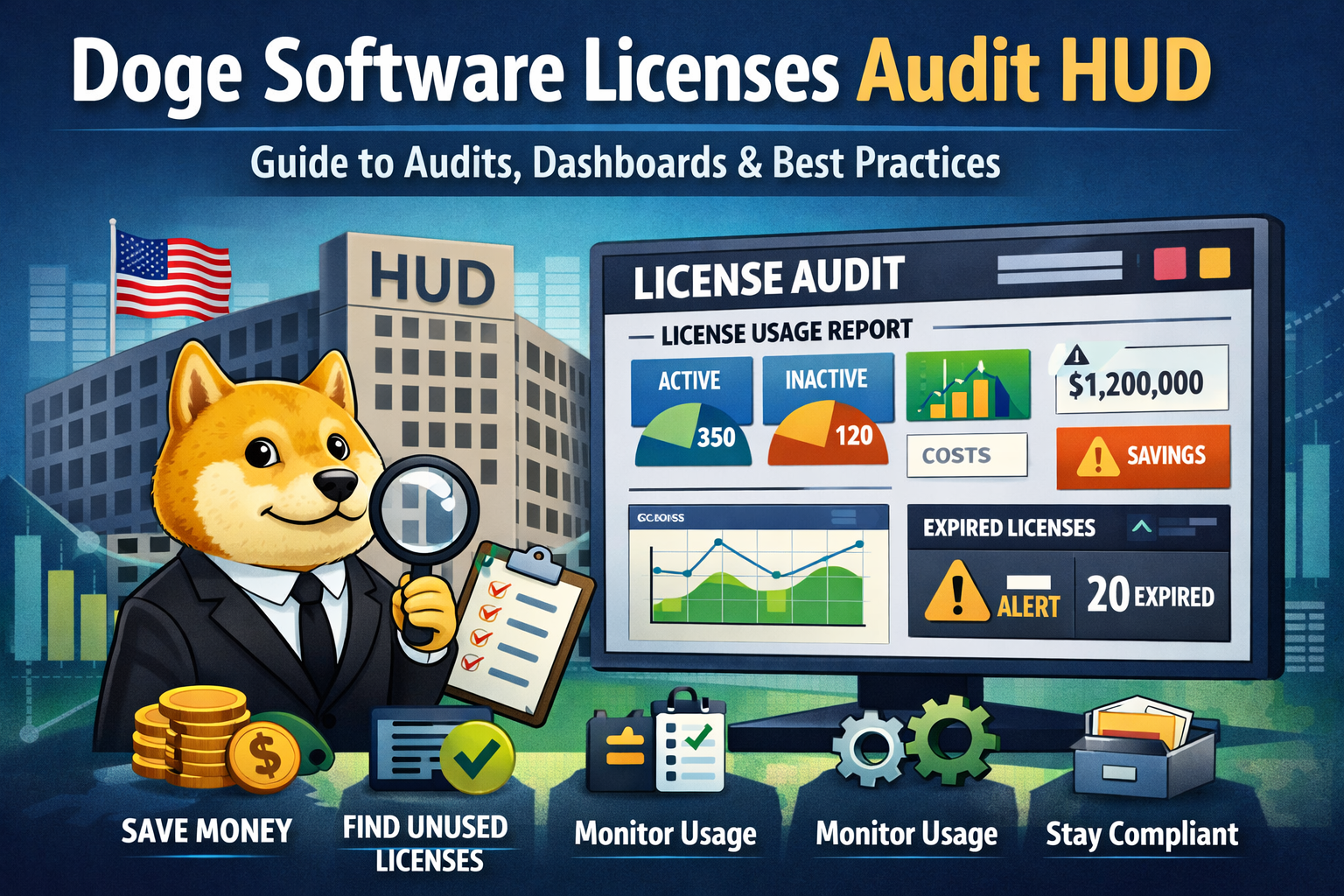
Many people are searching for the phrase “doge software licenses audit hud.” This phrase looks simple, but it actually has more than one meaning. Some websites use HUD to talk about the U.S. Department of Housing and Urban Development, which is a government agency. Other websites use HUD to mean a Heads-Up Display, which is a dashboard that shows data in real time.
The phrase also includes doge software licenses audit hud. This means checking how many doge software licenses audit hud an organization has, how many people use them, and how much money is being spent. The word DOGE is often used online to describe a group or effort that talks about cutting waste and improving spending. In many news stories, DOGE is linked to claims about unuseddoge software licenses audit hud and possible savings.
Because of this, different websites talk about this topic in very different ways. Some focus on government spending, focus on dashboards and tools. Some focus on the idea of waste., on how audits really work in real life. This article explains all of these ideas in basic and simple English. It uses clear sections, lists, and tables so it is easy to read and understand Galoble
What DOGE Means in This Topic
The word DOGE is used in many online posts and news articles. In this topic, DOGE is usually used to describe an effort or group that talks about finding waste in government or large organizations.
What DOGE Is Said to Do
Many articles say DOGE focuses on:
-
Checking government spending
-
Finding waste in software and tools
-
Looking for unused licenses
-
Showing big numbers to get attention
-
Talking about saving public money
These ideas are often shared in short posts, headlines, and simple reports.
Where These Claims Are Shared
You can find these claims in:
-
News websites
-
Blogs
-
Social media posts
-
Opinion articles
-
Tech and business sites
Some of these sources try to explain the full story. Others only show the biggest numbers and the most shocking examples.
What “HUD” Can Mean
The word HUD is one of the main reasons this topic is confusing. Different websites use this word in different ways.
HUD as a Government Agency
In many articles, HUD means the U.S. Department of Housing and Urban Development. This is a government agency. Some stories say that HUD had many doge software licenses audit hud that were not being used. These stories talk about:
-
How many licenses HUD bought
-
How many people really used them
-
How much money was spent
-
How much money could be saved
When HUD means the agency, the topic is mostly about government spending and audits.
HUD as a Dashboard System
In other articles, HUD means Heads-Up Display. This is not a government agency. It is a dashboard that shows data in real time. In this meaning, “audit HUD” is a tool that shows:
-
How many licenses exist
-
Who is using them
-
Which licenses are unused
-
When licenses will expire
-
How much money is being spent
Two Meanings of HUD Table
| Meaning of HUD | What It Refers To | Main Topic |
|---|---|---|
| Government HUD | Housing and Urban Development agency | Public spending and audits |
| Dashboard HUD | Heads-Up Display system | Monitoring and reporting software |
What a Software License Is
Before talking about audits, it is important to understand what a software license is.
Simple Meaning of a Software License
A software license is permission to use software. Companies and government agencies usually pay for these licenses. Each license can allow:
-
One user to use the software
-
Or one device to use the software
-
Or a group of users to share access
Common Types of Licenses
-
Per user license
-
Per device license
-
Team or group license
-
Company-wide license
-
Time-based license
Why Licenses Cost Money
Software companies charge money because:
-
They build and update the software
-
They provide support and security updates
-
They invest in new features
-
They protect their products
What a Software License Audit Is
A software license audit is a process to check how many licenses an organization has and how many are really used.
What an Audit Tries to Find
An audit usually looks for:
-
Total number of licenses bought
-
Number of active users
-
Number of inactive users
-
Last login dates
-
Types of licenses
-
Rules in the license agreement
Why Organizations Do Audits
Organizations do audits to:
-
Save money
-
Follow rules and laws
-
Reduce waste
-
Improve planning
-
Avoid legal problems
Common Audit Data Table
| Data Item | What It Shows |
|---|---|
| Total licenses | How many licenses were purchased |
| Active users | Who is using the software |
| Inactive users | Who is not using the software |
| Last login date | When a user last used the software |
| License type | What kind of license it is |
| Renewal date | When the license needs renewal |
What the Audit Claims Usually Say
Many articles talk about audit claims. These claims often say that there are too many licenses and not enough users.
Common Claims in Articles
-
Thousands of licenses are not used
-
Many accounts are inactive
-
Money is being wasted
-
Big savings are possible
-
The system is not managed well
These claims are often written in a strong and simple way to get attention.
Why Big Numbers Get Attention
Big numbers look serious and important. For example:
-
“10,000 unused licenses”
-
“Millions of dollars wasted”
But numbers alone do not always show the full story.
Why “Unused” Does Not Always Mean Waste
A license can look unused, but there can be good reasons for that.
Common Reasons Licenses Look Unused
-
A user only needs the tool sometimes
-
A user is on leave or on another project
-
The license is saved for emergency use
-
The license is for future staff
-
The license is shared by different shifts
Example Table
| Situation | Why License Looks Unused |
|---|---|
| Staff on leave | No recent login |
| Emergency access | Used only in special cases |
| Future hiring | Reserved for new workers |
| Shared device | Many users, few logins |
| Seasonal work | Used only part of the year |
Why Organizations Buy Extra Licenses
It is very common for big organizations to buy more licenses than they need at one moment.
Bulk Buying and Contracts
Organizations often:
-
Buy licenses in large bundles
-
Get a lower price per license
-
Sign long contracts
-
Avoid delays when new staff join
Planning for the Future
Extra licenses may be bought because:
-
New workers will join
-
New projects will start
-
Temporary workers may need access
-
Workload may increase
Safety and Backup Reasons
Some licenses are kept for:
-
Backup users
-
Emergency situations
-
Training and testing
-
System failures
Reasons for Extra Licenses Table
| Reason | Why It Makes Sense |
|---|---|
| Bulk contracts | Cheaper and easier to manage |
| Future growth | Ready for new staff |
| Emergency access | Safety and quick response |
| Training | Learning and testing needs |
| Shared use | Different users at different times |
The “Audit HUD” Dashboard Idea
When HUD means Heads-Up Display, it is about a dashboard that shows license data.
What a License Dashboard Shows
A license dashboard can show:
-
Total licenses
-
Active users
-
Inactive users
-
Cost per license
-
Compliance status
-
Warnings and alerts
Common Dashboard Sections
-
Inventory list
-
Usage charts
-
Cost reports
-
Compliance checks
-
Alert messages
Who Uses This Dashboard
-
IT teams
-
Finance teams
-
Procurement teams
-
Compliance teams
-
Managers
Dashboard Features Table
| Feature | What It Does |
|---|---|
| Inventory | Lists all licenses |
| Usage | Shows who uses what |
| Cost | Shows spending |
| Compliance | Checks rules |
| Alerts | Warns about problems |
Benefits of Using an Audit Dashboard
Dashboards can help organizations manage software better.
Main Benefits
-
Clear view of all licenses
-
Faster decisions
-
Early warning of problems
-
Better planning
-
Easier reports
Example Benefits Table
| Benefit | Why It Is Helpful |
|---|---|
| Clear data | Less confusion |
| Real-time updates | Faster action |
| Better planning | Fewer surprises |
| Cost control | Less waste |
| Easy reports | Better communication |
Risks and Problems in License Audits
Audits are useful, but they also have risks.
Data Problems
Data can be wrong because:
-
Old user lists are not cleaned
-
People leave but accounts stay
-
Some systems do not connect well
-
Duplicate accounts exist
Risk of Removing Too Many Licenses
If too many licenses are removed:
-
Staff may lose access
-
Work can stop
-
Projects can be delayed
-
Emergency work can fail
Privacy and Security Concerns
Audits use user data. This means:
-
Data must be protected
-
Mistakes can cause problems
-
Teams must limit access
-
Teams must follow the rules
Best Practices for Good License Management
Good license management is better than one big audit once a year.
Build One Central List
-
List all software tools
-
List all licenses
-
List contract details
-
Keep the list updated
Match Buying Records With Usage
-
Compare purchases with real use
-
Check login reports
-
Find truly unused licenses
-
Talk to teams before changes
Set Clear Join and Leave Rules
-
Give access when people join
-
Remove access when people leave
-
Review access often
Review Schedule Example
| Time | What to Review |
|---|---|
| Monthly | Key tools and big costs |
| Quarterly | Full usage review |
| Yearly | Contract and budget planning |
Compliance and Rules
In government and large organizations, rules are very important.
Why Compliance Matters
-
Teams must follow the law
-
Organizations must respect contract terms
-
Agencies must use public money carefully
-
Teams must document audits clearly
Clear Reports vs Simple Headlines
-
Clear reports explain reasons and limits
-
Headlines focus on big numbers
-
Good decisions need full information
Practical Steps to Improve Software Spending
Organizations can improve step by step.
Short-Term Actions
-
Remove old accounts
-
Pause licenses for unused projects
-
Reclaim licenses from ex-staff
Medium-Term Actions
-
Centralize software buying
-
Reduce number of similar tools
-
Train teams on good use
Long-Term Actions
-
Use license management tools
-
Use dashboards for monitoring
-
Plan contracts better
Improvement Steps Table
| Time Frame | Actions |
|---|---|
| Short term | Clean up unused accounts |
| Medium term | Centralize and standardize tools |
| Long term | Use dashboards and planning |
FAQs
Is this really waste
Sometimes yes, sometimes no. Some unused licenses are real waste.Teams keep other licenses for good reasons, such as future needs, safety, and contract rules.
How can organizations prove real savings
Organizations should show real savings by:
-
Lower contract costs
-
Fewer paid licenses over time
-
No harm to daily work
What is the safest way to cut licenses
-
Check data carefully
-
Talk to teams first
-
Remove licenses in small steps
-
Watch for problems
The Difference Between Headlines and Real Management
Headlines often say:
-
“Thousands of licenses wasted”
-
“Millions saved”
Real management is slower and more careful. It needs:
-
Good data
-
Good tools
-
Good planning
-
Good communication
Conclusion
The phrase “doge software licenses audit hud” can mean different things. Sometimes articles talk about the government agency called HUD and claim that it has many unused software licenses.Sometimes it is about a HUD dashboard that shows license data in real time. Many articles focus on big numbers and possible waste. But software licensing is complex.Extra licenses exist for good reasons, such as future plans, safety needs, and contract terms. When teams run software license audits carefully, these audits help organizations manage licenses better and reduce waste. Dashboards and regular reviews can help organizations understand their real needs. The best goal is not just to cut licenses, but to use software in a smart and safe way, protect users, follow rules, and make decisions based on full and clear information