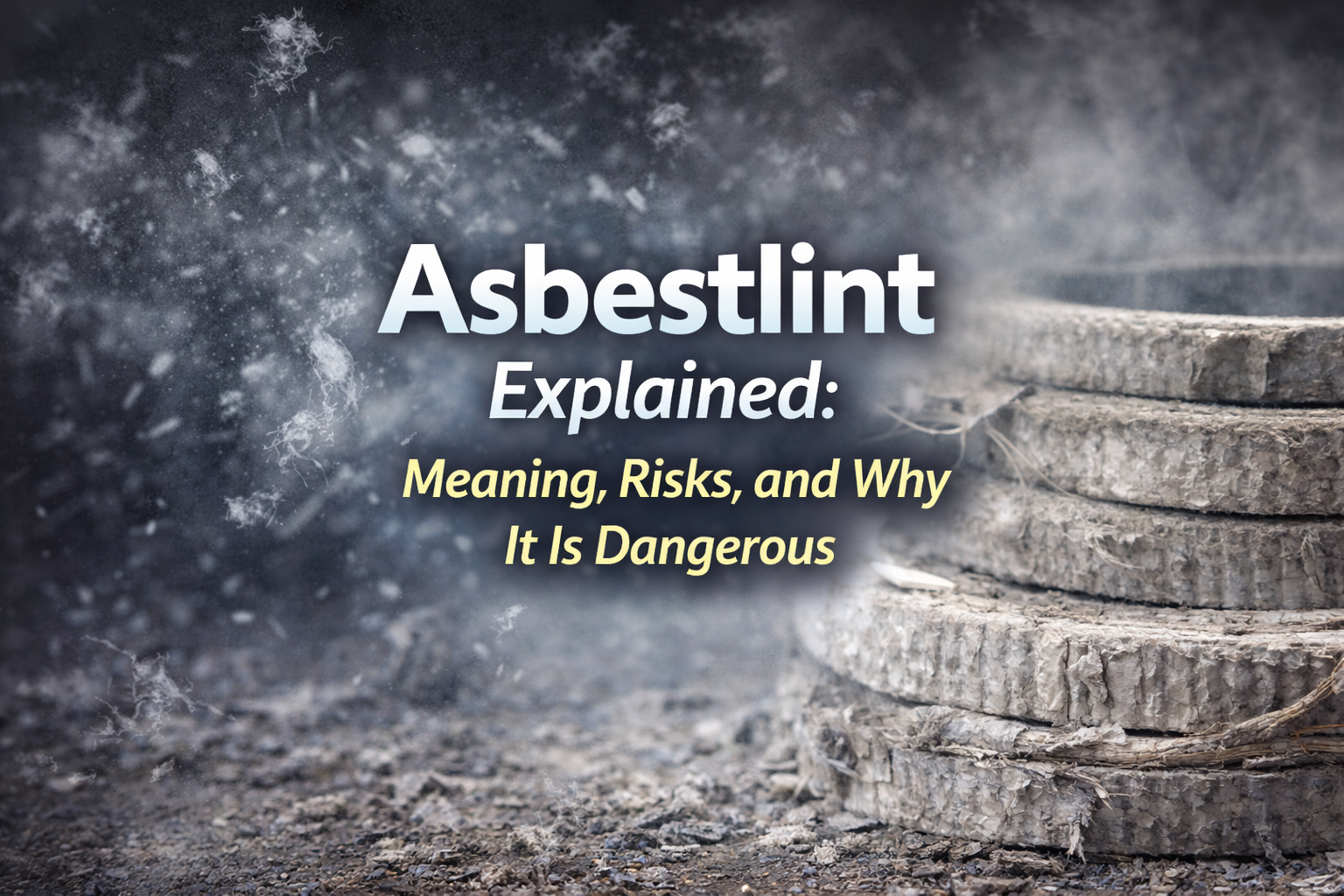
Asbestlint Explained: Meaning, Risks, and Why It Is Dangerous
Asbestlint is a term that many people see when learning about asbestos. It is often mentioned in articles about old buildings, health risks, and safety concerns. The word can be confusing because it is used in more than one way, some people use asbestlint to describe asbestos tape or cloth used in the past. Others use the same word to describe loose asbestos fibers that mix with dust or air. Both meanings are connected to asbestos, and both can be dangerous.
This article explains asbestlint in a simple and clear way. It helps you understand what it means, where it is found, why it is harmful, and why people should be careful around it Tribupneu
What Is Asbestlint?
Asbestlint is not an official scientific term. It is a general word used to talk about asbestos-related materials or fibers.
In simple words, asbestlint refers to:
-
Asbestos materials that look like tape or fabric
-
Small asbestos fibers that behave like dust or lint
Both forms come from asbestos and can be harmful to health.
Two Common Meanings of Asbestlint
Asbestlint is mainly used in two ways:
-
Asbestos tape or fabric
This is a solid material made with asbestos. It was often wrapped around pipes or equipment. -
Loose asbestos fibers
These are tiny fibers released into the air when asbestos materials break or wear out.
Knowing which meaning is being used is important for safety.
Where the Term Asbestlint Comes From
Word Breakdown
The word asbestlint comes from:
-
Asbest, meaning asbestos
-
Lint, meaning small fibers or dust
This explains why the term is used for both fabric-like materials and loose fibers.
How the Term Became Common
In the past, asbestos was widely used in construction and industry. People later noticed that asbestos materials could release tiny fibers that looked like dust or lint.
Over time, people began using the word asbestlint to describe these asbestos-related fibers and materials, even though it was never an official term.
Types of Asbestlint
Asbestlint as Asbestos Tape or Fabric
This type of asbestlint is solid and visible. It was made by weaving asbestos fibers into cloth or tape.
Common features include:
-
Flexible texture
-
White or gray color
-
High resistance to heat
These materials are dangerous when damaged or disturbed.
Asbestlint as Loose Asbestos Fibers
This type of asbestlint is much harder to see. The fibers are very small and float in the air.
Key points include:
-
Invisible to the eye
-
Easy to breathe in
-
Very harmful to lungs
This form is often the most dangerous.
Two Forms of Asbestlint
| Feature | Asbestos Tape or Fabric | Loose Asbestos Fibers |
|---|---|---|
| Form | Solid material | Dust-like fibers |
| Visibility | Often visible | Often invisible |
| Main danger | When broken | When inhaled |
| Common places | Pipes, boilers | Air, dust |
| Risk level | High if disturbed | Very high |
Where Asbestlint Is Commonly Found
Older Buildings
Asbestlint is most often found in buildings built many years ago, before asbestos was restricted.
Common areas include:
-
Basements
-
Attics
-
Utility rooms
Pipes and Heating Systems
Asbestos tape was often wrapped around hot pipes and boilers.
These areas are risky because:
-
Heat weakens materials
-
Repairs can release fibers
Electrical Areas
Asbestos was used around electrical parts because it resists fire.
Disturbing these areas can release asbestos fibers.
Factories and Industrial Sites
Asbestlint was widely used in factories for:
-
Insulation
-
Fire protection
-
Equipment wrapping
Workers in these places faced higher exposure.
Renovation and Demolition Areas
Home repairs and building demolition often release asbestos fibers.
Activities that cause risk include:
-
Drilling
-
Cutting
-
Breaking materials
Why Asbestlint Is Dangerous
How Asbestos Affects the Body
Asbestos fibers are very small and sharp. When breathed in, they can become trapped in the lungs.
The body cannot easily remove these fibers. Over time, they cause damage.
Breathing Is the Main Risk
The biggest danger from asbestlint is inhaling the fibers.
Once inside the lungs:
-
Fibers stay for many years
-
Lung tissue becomes damaged
-
Serious illness can develop later
No Safe Exposure Level
There is no safe amount of asbestos exposure. Even small amounts can increase health risks.
This is why caution is always necessary.
Health Problems Linked to Asbestlint
Breathing Problems
Exposure can cause:
-
Shortness of breath
-
Chest tightness
-
Long-term lung damage
Asbestosis
Asbestosis is a lung disease caused by asbestos fibers.
Symptoms include:
-
Persistent cough
-
Difficulty breathing
-
Chest pain
Lung Cancer
Asbestos exposure increases the risk of lung cancer, especially in smokers.
Mesothelioma
Mesothelioma is a rare cancer caused almost only by asbestos exposure.
It often appears many years after exposure.
Long Delay of Symptoms
Health problems from asbestos often appear:
-
20 to 40 years after exposure
-
When damage is already severe
How Asbestlint Becomes Airborne
Aging Materials
As asbestos materials age, they slowly break down.
This releases fibers into the air.
Physical Damage
Fibers are released when materials are:
-
Cut
-
Drilled
-
Broken
-
Sanded
Cleaning Activities
Sweeping or vacuuming asbestos dust can spread fibers into the air.
Construction and Repairs
Renovation work is one of the biggest causes of asbestos exposure today.
How to Recognize Possible Asbestlint
Visual Clues
Possible signs include:
-
Old white or gray tape
-
Cloth-like insulation
-
Brittle materials
Visual checks are not enough to confirm asbestos.
Materials That May Contain Asbestos
These include:
-
Pipe insulation
-
Ceiling tiles
-
Vinyl flooring
-
Cement boards
Importance of Professional Testing
Only trained professionals and lab tests can confirm asbestos.
Trying to test materials yourself is dangerous.
Safety Steps Around Asbestlint
What You Should Not Do
If you suspect asbestos, do not:
-
Touch the material
-
Break or cut it
-
Sweep nearby dust
Basic Safety Actions
If asbestos may be present:
-
Keep people away
-
Avoid disturbing the area
-
Close off the space if possible
Protective Equipment
Professionals use:
-
Special masks
-
Protective clothing
-
Controlled air systems
Rules and Laws About Asbestlint
General Safety Rules
Many countries have strict rules for asbestos handling.
These rules aim to protect:
-
Workers
-
Residents
-
The environment
Workplace Rules
Employers must:
-
Identify asbestos risks
-
Protect workers
-
Use trained removal teams
Homeowner Responsibilities
Homeowners usually cannot remove asbestos themselves.
Professional help is required.
Managing and Removing Asbestlint
Why Professional Help Is Important
Trained teams:
-
Prevent fiber spread
-
Use safe removal methods
-
Dispose of waste correctly
Removal or Sealing
Asbestos may be:
-
Removed fully
-
Sealed to stop fiber release
The choice depends on condition and location.
Safe Disposal
Asbestos waste must be:
-
Sealed tightly
-
Taken to approved facilities
Asbestlint in Homes
Common Home Locations
Asbestlint may be found in:
-
Attics
-
Basements
-
Heating systems
-
Old flooring
Risk During Home Repairs
Repairs often disturb hidden asbestos.
Testing before renovation is important.
Advice for Homeowners
Homeowners should:
-
Avoid touching old materials
-
Get professional advice
-
Follow safety rules
Asbestlint in Workplaces
Higher Risk Jobs
Some jobs have higher exposure risk:
-
Construction
-
Shipbuilding
-
Manufacturing
Employer Duties
Employers must:
-
Assess risks
-
Provide training
-
Protect workers
Worker Protection
This includes:
-
Safety training
-
Protective equipment
-
Exposure monitoring
Common Myths About Asbestlint
“It Is Safe If Left Alone”
Old asbestos can still release fibers as it ages.
“Small Amounts Do Not Matter”
Even small exposure can be harmful.
“Only Old Buildings Have Asbestos”
Some newer buildings may still contain asbestos materials.
Why Asbestlint Is Still a Problem Today
Old Buildings Are Still Used
Many old buildings still contain asbestos materials.
Ongoing Renovation Work
Repairs and upgrades continue to expose asbestos.
Long-Term Health Effects
People exposed years ago may still get sick today.
Need for Awareness
Understanding asbestlint helps prevent exposure and illness.
FAQs
What is asbestlint?
Experts use the term asbestlint to describe asbestos-related materials or fibers. It can mean asbestos tape or cloth, or loose asbestos fibers that mix with dust in the air.
Is asbestlint the same as asbestos?
Asbest lint is related to asbestos, but it is not an official term. It usually refers to asbestos materials in tape form or loose asbestos fibers released from old materials.
Does asbestlint only exist in old buildings?
Asbestlint appears more often in older buildings, but some newer buildings can still contain it if builders used asbestos materials. Testing is the only way to be sure.
Conclusion
People use the term asbestlint to describe asbestos-related materials and fibers. It can mean asbestos tape or loose asbestos fibers in the air.Both forms are dangerous, especially when people disturb them.Asbestos was widely used in the past, so many buildings still contain asbestlint today. Exposure can lead to serious health problems that may appear many years later, knowing what asbestlint is and how to handle it safely is very important. When people suspect asbestos, they should avoid contact and seek professional help. Awareness and caution help protect health now and in the future.